










VITILAN V3 2.0 vs U3: Is It Worth Spending €100 More?
by wangziru on Nov 10, 2026

At €799 for the U3 and €899 for the V3 2.0, the price difference is modest, but the choice involves more than budget. The U3 offers easier access through its step-through frame, while the V3 2.0 pairs wider tyres with hydraulic disc brakes. Both fold and have removable batteries, so their shared features may leave you wondering which to choose. The useful questions are where you ride, how often you get on and off, and whether the V3 2.0’s additional features will make a difference on your regular journeys.
What Does the Extra €100 Buy?
Start with the differences that matter most. The European website currently lists the V3 2.0 at €899 and the U3 at €799. Offers and final prices may change.
|
Feature |
VITILAN V3 2.0 |
VITILAN U3 |
What it means when choosing |
|
Current price |
€899 |
€799 |
A €100 difference |
|
Tyres |
20 × 4 inches |
20 × 3 inches |
The V3 2.0 has wider tyres |
|
Brakes |
Hydraulic disc brakes |
Mechanical disc brakes |
Different operation and maintenance requirements |
|
Frame |
Folding frame with a higher step-over |
Step-through folding frame |
The U3 is easier to step into |
|
Battery |
Removable 48V 13Ah |
Removable 48V 13Ah |
The same nominal capacity |
|
Gears |
Shimano seven-speed |
Shimano seven-speed |
Both let you adjust your pedalling effort |
|
Suspension |
Suspension fork |
Suspension fork and suspension seatpost |
Different cushioning arrangements; the U3 is not a full-suspension bike |
The main reasons to spend more on the V3 2.0 are its wider tyres and hydraulic brakes. The U3 puts greater emphasis on easy access and a lower purchase price.
Battery capacity and seven-speed gearing are shared features. A higher price therefore does not establish that the V3 2.0 travels further or suits every rider better. The extra spending makes sense when it buys something you will use regularly.
The V3 2.0’s Wider Tyres Make More Sense on Varied Surfaces
Both 20 × 4-inch and 20 × 3-inch tyres are relatively wide. Neither needs extreme terrain to justify its place on an everyday bike. A more useful comparison is how often your usual routes include paving joints, cobbles, firm gravel and uneven sections.
What Difference Can the Extra Width Make?

With other factors being similar, a wider tyre generally holds more air, providing more scope to adjust pressure and cushioning. At a suitable pressure, the tyre can absorb some smaller impacts as the surface changes.
Width alone does not determine comfort, though. Tyre construction, pressure, rider and luggage weight, and speed all affect the result. An overinflated fat tyre can still feel harsh; reducing pressure too far can compromise handling and efficiency.
The VITILAN V3 2.0 is particularly worth considering if your plans combine local journeys with leisure rides beside rivers, through parks or along firm gravel paths. Its wider tyres and suspension fork have a clear role when those surfaces change.
When Is Wider Less Important?
If most journeys follow smooth streets to the shops, a café or nearby appointments, tyre width may not be the feature that most affects your experience.
Nor does the V3 2.0’s wider tyre automatically establish better grip on wet roads or easy progress through loose sand. Tread, rubber compound, surface conditions and riding technique also matter.
Riders who regularly encounter varied, firm surfaces have a stronger reason to choose the V3 2.0’s wider tyres. If frequent stops and easy access dominate your routine, frame design deserves more attention.
Hydraulic Disc Brakes Give the V3 2.0 a Stronger Case
The tyre difference is easy to see. The brake difference becomes clearer when you consider how you ride.
The U3’s mechanical disc brakes use cables to transmit the action of the levers. The V3 2.0’s hydraulic brakes use fluid pressure. Both require correct setup and maintenance; the relevant differences include lever effort, control and servicing.
Why Does Lever Feel Matter?
Braking involves more than coming to a complete stop. Approaching a bend, passing through a busy area or controlling your pace on a gentle descent all call for gradual adjustments.
A well-maintained hydraulic system generally makes it easier to apply braking force with less hand effort and control that force progressively. If your routes involve repeated braking or longer periods in the saddle, those characteristics are worth considering.
That gives the V3 2.0 a practical selling point: the brakes are something you use on every ride. For riders who value their operation, this part of the €100 difference has relevance well beyond an occasional leisure outing.
Are the U3’s Mechanical Brakes Inadequate?
Mechanical disc brakes can serve everyday riding well when correctly adjusted and maintained. Their cable-operated design is relatively straightforward, although cable condition, pad clearance and wear may need attention over time.
Hydraulic systems have their own maintenance requirements. Brake pads, discs and the system itself still need inspection and care.
The V3 2.0’s case rests on its braking characteristics, rather than a promise that it will always stop in a shorter distance. Tyres, surface conditions, load and rider response also affect stopping distance.
If you value lever control and regularly ride rolling routes or make frequent speed adjustments, the V3 2.0’s hydraulic brakes are a worthwhile reason to spend more.
For Frequent Stops, the U3’s Step-Through Frame Has Clear Value

Additional components can be appealing, but every ride begins with getting on the bike.
Shopping, collecting a parcel, waiting at junctions and stopping at a café can mean mounting and dismounting repeatedly. How easily you step into the frame can make those everyday journeys more convenient.
The VITILAN U3 has a step-through folding frame, reducing the need to lift your leg over a higher frame section. The benefit can be particularly noticeable when there is a bag on the rear rack or your clothing restricts movement.
That convenience is relevant to many riders. Anyone who prefers easier access or makes frequent stops may appreciate it.
A Low Step-Through, Low Saddle and Low Weight Are Different Things
A step-through frame provides easier access through the middle of the bike. It does not necessarily mean a lower saddle or a lighter bike.
Fit also depends on saddle height, leg length, reach and access to the brake levers. Consider whether you can stop, support and manoeuvre the bike comfortably. The step-through label alone cannot establish suitability for every height or every beginner.
Likewise, the V3 2.0’s higher step-over should not automatically be described as stronger or more stable. Those conclusions require evidence about the particular design and its performance.
If shopping and local errands are your main uses, and you get on and off repeatedly, the U3 offers a direct benefit. There is little reason to give up that daily convenience for extra tyre width you would rarely use.
What Do You Get Without Spending More?
Several useful features are common to both bikes. Treat them as the shared starting point, rather than additional reasons to pay more for the V3 2.0.
Equal Battery Capacity Does Not Guarantee Identical Range
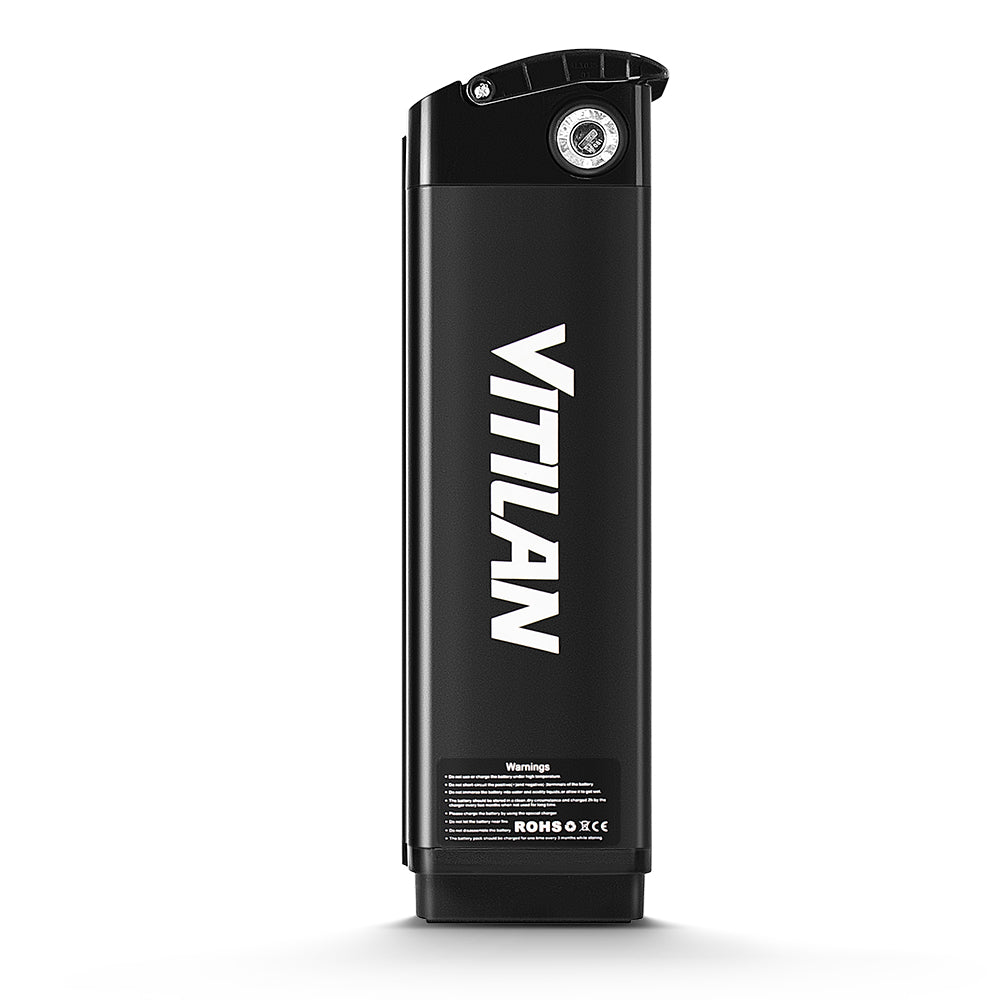
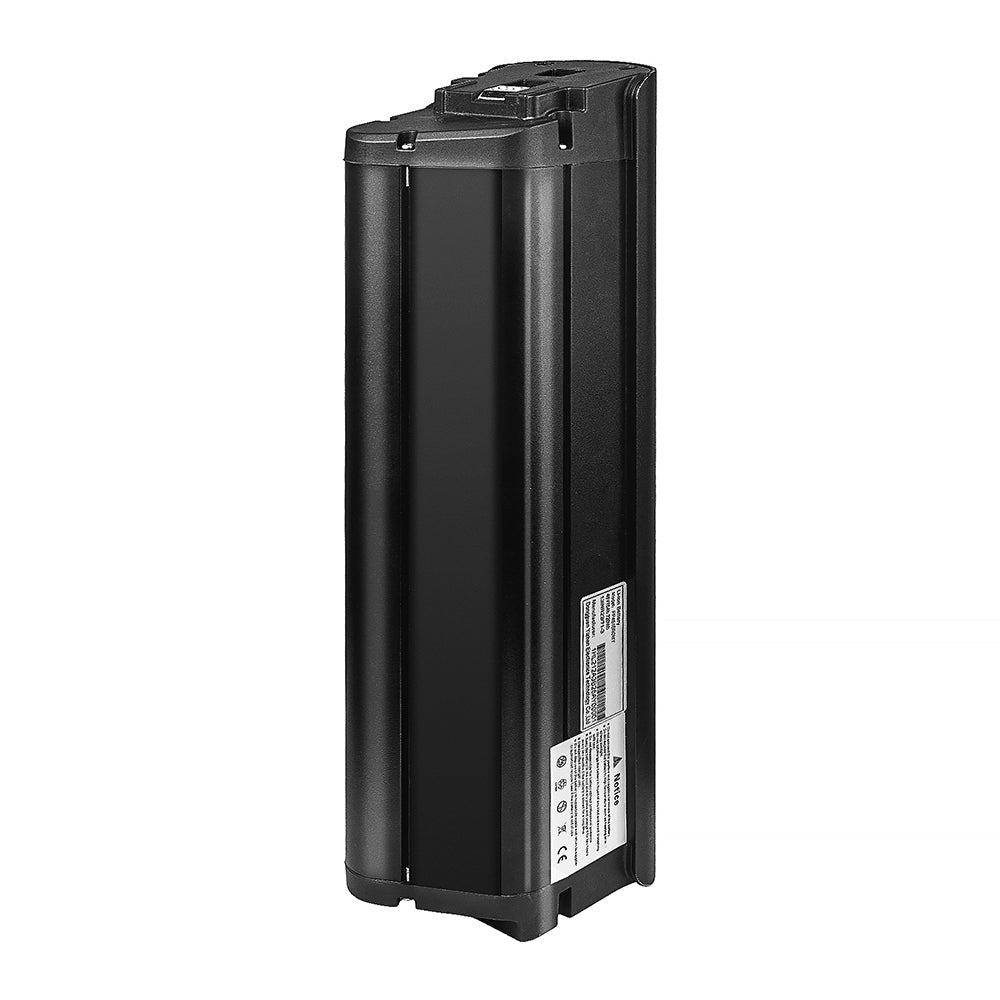
Both bikes list a 48V 13Ah battery, equivalent to approximately 624Wh when calculated from nominal voltage and capacity. Their nominal energy storage is the same, so battery capacity does not support a claim that the V3 2.0 travels further.
Actual range also depends on tyres, bike setup, assistance, gradients, temperature and load. Without a comparison under consistent conditions, neither should be declared the range winner.
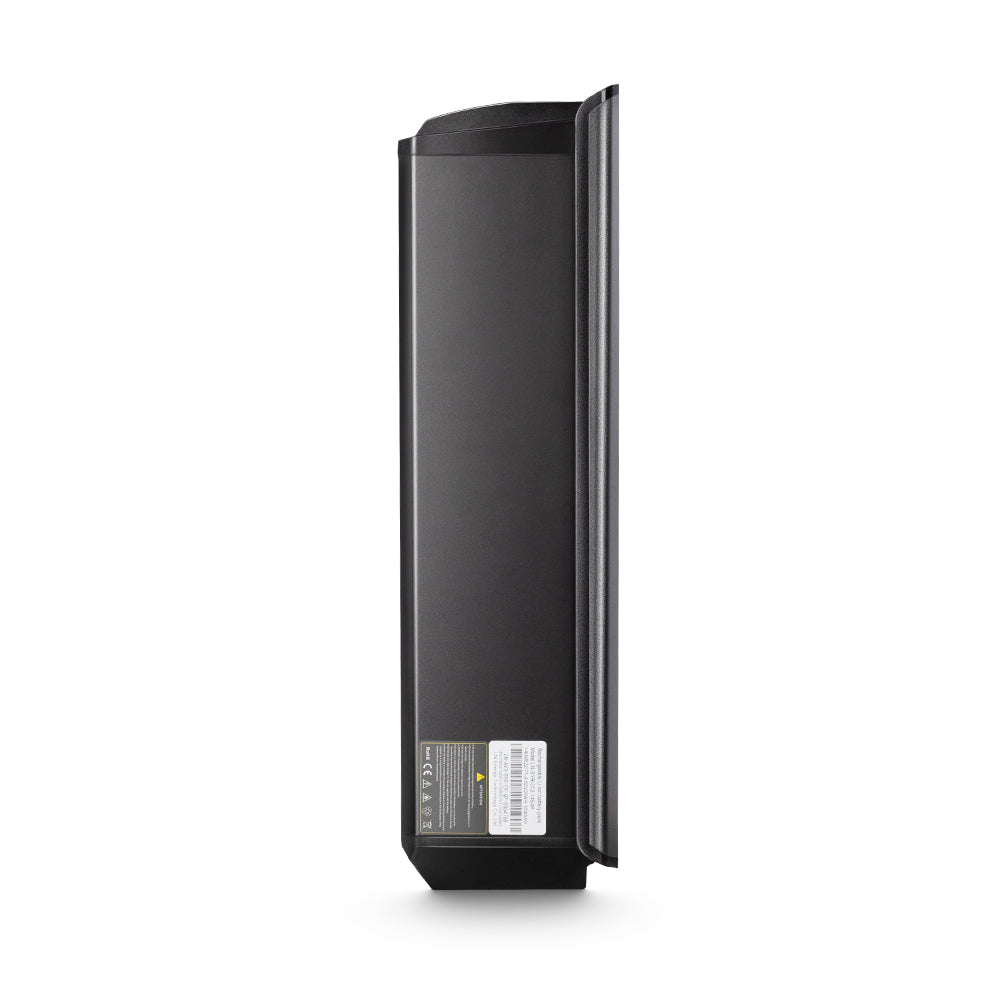
For everyday use, start with the return distance you need to cover and your charging arrangements. Both batteries can be removed for charging, so you do not need to increase your budget to obtain that convenience.
Folding Helps with Storage; Carrying Needs a Separate Check
Both bikes fold, but that does not establish that either is suitable for carrying upstairs every day.
If you keep the bike in a ground-level storage area, folding may help organise the space. If you regularly transport it by car, check the boot opening, usable interior space and room left for luggage. Daily lifting calls for particular attention to the bike’s actual weight and how you will handle it.
Appearance and broad descriptions such as “portable” are insufficient to decide which is easier to carry. Compare confirmed weights and folded dimensions using consistent measurements.
Do Not Overlook the U3’s Suspension Seatpost
Alongside its suspension fork, the U3 lists a suspension seatpost. The V3 2.0 uses a suspension fork. These act in different places, so price alone cannot establish which bike will feel more comfortable.
A suspension seatpost can cushion some of the impacts reaching the rider through the saddle, while the fork acts at the front wheel. Setup, riding position and surface conditions also influence the experience. The U3 is not a full-suspension bike, but its seatpost is still a feature worth including in the comparison.
Who Should Spend the Extra €100 on the V3 2.0?
The V3 2.0 deserves priority if you want one bike for everyday journeys and leisure rides, including firm park paths or gravel as well as streets. Its wider tyres and hydraulic brakes have practical roles in that mix.
The case becomes stronger if storage, lifting and mounting are already manageable for you. The extra €100 then goes towards components you expect to use regularly.
For nearby shopping, parcel collection and café trips, the U3 has an equally clear purpose. Its lower price retains a folding frame, removable battery and seven-speed gearing, while leaving more of your budget for a lock, helmet or suitable luggage.
|
Your main priority |
Start with |
|
A mix of streets and firm paths, with a preference for wider tyres |
V3 2.0 |
|
Rolling routes and a preference for hydraulic brake operation |
V3 2.0 |
|
Local errands with frequent mounting and dismounting |
U3 |
|
Step-through access as the main buying requirement |
U3 |
|
Longer range as the reason to spend more |
Neither has a larger nominal battery |
|
Frequent lifting or loading into a car |
Confirm weight, folded dimensions and handling arrangements first |
When comparing folding electric bikes, focus on the differences you will encounter every day. If wider tyres and hydraulic brake control match your riding, the V3 2.0 gives that extra €100 a clear purpose and deserves a place at the top of your shortlist.
Frequently Asked Questions
Can the V3 2.0 and U3 batteries be interchanged?
Matching 48V 13Ah specifications do not establish compatibility. The casing, mounting interface, connectors and electrical requirements must also match. When buying a replacement, provide the model and version details and ask the brand to confirm the correct battery.
Can both bikes use the same baskets or panniers?
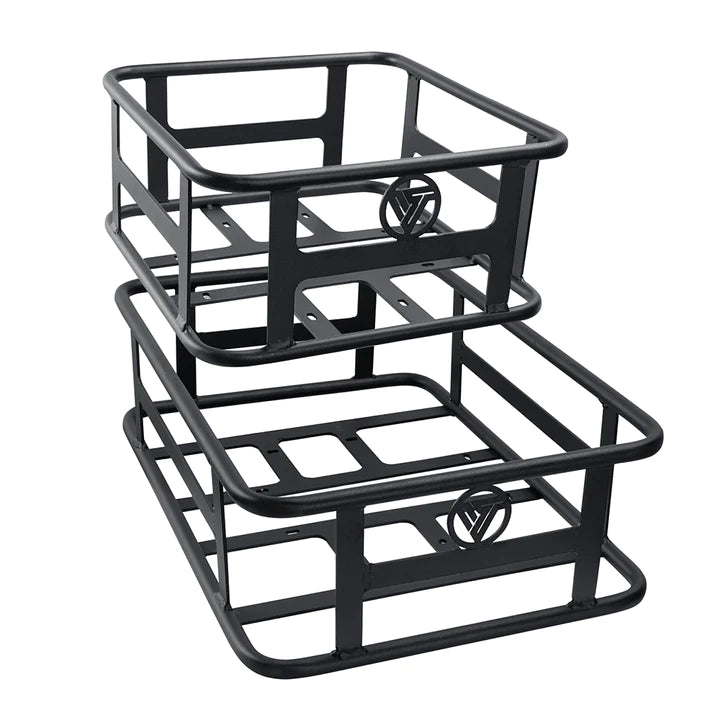
Some universal accessories may fit, but mounting points, attachment methods and permitted loads need checking separately. Panniers must also clear your heels, the tyres and the drivetrain. An accessory fitting the U3 does not guarantee that it will fit the V3 2.0 without changes.
Could I buy the U3 and later fit tyres as wide as those on the V3 2.0?
Do not assume that changing tyres is a straightforward way to obtain the V3 2.0’s setup. Tyres must suit the rims and have sufficient clearance around the frame, fork and mudguards. If you already know you want 20 × 4-inch tyres, choosing a bike designed around that size is the simpler approach.
Should a first-time buyer budget for assembly and adjustment?
If you can follow the instructions and complete the assembly, fastening and checks correctly, you may be able to do this yourself. Otherwise, ask a local bike shop about assembly and setup. Charges and service scope vary, so checking before you buy helps establish the full budget.


