










How Long Does an E-Bike Battery Last? Lifespan, Charge Cycles and What Buyers Should Know
by wangziru on Sep 11, 2026

When buying an electric bike, many riders focus first on how far it can travel on a single charge. It is just as important to think about a longer-term question: will the battery still meet your needs a few years from now?
Lithium-ion batteries rarely stop working overnight. More often, their capacity gradually declines, which means familiar routes may require more frequent charging over time. Charge cycles, temperature, storage conditions, cell quality and riding frequency can all influence how quickly this happens.
Battery Life and Range Are Not the Same Thing
Battery range and battery lifespan are often treated as if they mean the same thing, but they describe two different aspects of an e-bike battery.
Range refers to how far you can ride on a single charge.
Battery lifespan describes how much of the battery's original capacity remains after years of use and repeated charging.
For example, a new battery may comfortably cover several days of commuting between charges. A few years later, the same journeys may require more frequent charging. As long as the battery still works reliably and provides enough range for your routine, that does not necessarily mean it has reached the end of its useful life.
A noticeable drop in range is therefore not, by itself, a reason to replace the battery immediately. For most riders, the more useful question is whether the remaining capacity still suits the journeys they actually make.
How Long Does an E-Bike Battery Usually Last?
A lifespan of around 3–5 years or roughly 500–1,000 full charge cycles is often used as a general reference for lithium-ion e-bike batteries. These figures are useful for setting expectations, but they should not be treated as a fixed expiry date. Battery quality, riding habits, temperature and usage all affect how quickly capacity declines.
Manufacturer data also shows why charge cycles are better viewed as a measure of ageing rather than a countdown. Shimano states that some of its e-bike batteries can retain more than 60% of their original capacity after 1,000 full charge cycles.
A charge cycle does not mean plugging the battery in once. One full cycle represents using the equivalent of 100% of the battery's total capacity. For example, using 50% one day and another 50% the next adds up to roughly one full cycle.
That means charging every day does not necessarily equal one cycle per day. Rather than counting how often you connect the charger, it is more useful to watch how the battery's real-world range and usable capacity change over time.
What Affects E-Bike Battery Lifespan?
Temperature is one factor that is easy to overlook.
Lithium-ion batteries do not respond well to prolonged exposure to excessive heat. Leaving a battery in a hot vehicle or storing it for long periods in a very warm environment can increase the rate of aging.
Cold weather behaves differently. Lower temperatures can temporarily reduce available capacity and range, so a shorter winter ride does not automatically mean the battery has suffered permanent deterioration.
Bosch also identifies temperature, charge cycles and storage conditions as important factors affecting lithium-ion e-bike battery life. For longer-term storage, Bosch recommends keeping the battery at around 30%–60% charge in a dry place at room temperature.
Charging habits matter as well. There is generally no need to run the battery completely flat before every recharge, and leaving it at a very low state of charge for long periods is best avoided.
Riding style affects how quickly charge cycles accumulate. Short urban journeys place different demands on a battery from regular long-distance riding, climbing or carrying heavy loads.
For more practical advice on charging, temperature and storage, see our battery care guide. That article focuses on day-to-day maintenance, while this one looks more closely at lifespan and what buyers should consider before purchasing an e-bike.
How Can You Tell When an E-Bike Battery Is Ageing?
The first change most riders notice is usually a reduction in range.
If your route, assistance level and load have stayed broadly the same, but the distance you can cover between charges keeps falling, the battery may have lost some usable capacity.
Other changes worth paying attention to include:
- Needing to recharge much more often than before
- Battery percentage dropping unusually quickly
- Unexpected power cut-outs while riding
- The battery no longer charging normally
- Battery-level readings becoming inconsistent
These symptoms do not always mean the battery cells themselves have failed. Problems with the charger, connectors or other parts of the electrical system can sometimes produce similar behaviour.
For that reason, one unusual event is not usually enough to justify buying a replacement battery.
Some brands, warranty programmes and second-hand e-bike inspection services use a percentage of original capacity as a battery-health benchmark. However, there is no universal rule that says every e-bike battery must be replaced once it drops below 80% capacity.
If the battery remains stable and its remaining range still suits your daily journeys, continuing to use it may be perfectly reasonable.
Physical warning signs need more caution.
A battery that is swollen, unusually hot, leaking, giving off an unusual smell or visibly damaged should not continue to be used normally. Do not open the battery casing yourself. Bosch also advises that e-bike battery housings should only be handled by trained professionals.
So the question is not simply whether the battery is three or five years old. Its remaining range, reliability and overall condition are usually far more useful indicators of whether replacement is actually needed.

What Battery Information Should You Check Before Buying an E-Bike?
When comparing e-bikes, battery capacity is often one of the first specifications people notice.
Figures such as 500Wh or 720Wh describe how much energy the battery can store. With other conditions being similar, a larger battery generally provides more usable energy and may support longer rides between charges.
But a larger battery does not automatically mean a longer service life.
Battery quality depends on more than watt-hours. Cell quality, the Battery Management System (BMS), and compatibility between the battery, controller and charger can all affect long-term performance.
Is the Battery Removable?
A removable battery can make everyday ownership much easier.
If the bike is stored in a garage, communal area or somewhere without easy access to a power socket, the battery can be taken indoors for charging. It is also easier to store separately during winter or other long periods when the bike is not being used.
Will Replacement Batteries Be Available Later?
This is easy to overlook when buying a new e-bike, but it can make a big difference several years later.
Batteries are components that naturally lose capacity over time. If the frame, motor and other parts of the bike are still working well but the original battery no longer provides enough range, having a clear replacement option becomes important.
A replacement battery cannot be chosen simply because its voltage and capacity look similar. The model, mounting system, connectors, controller and charger all need to be compatible.
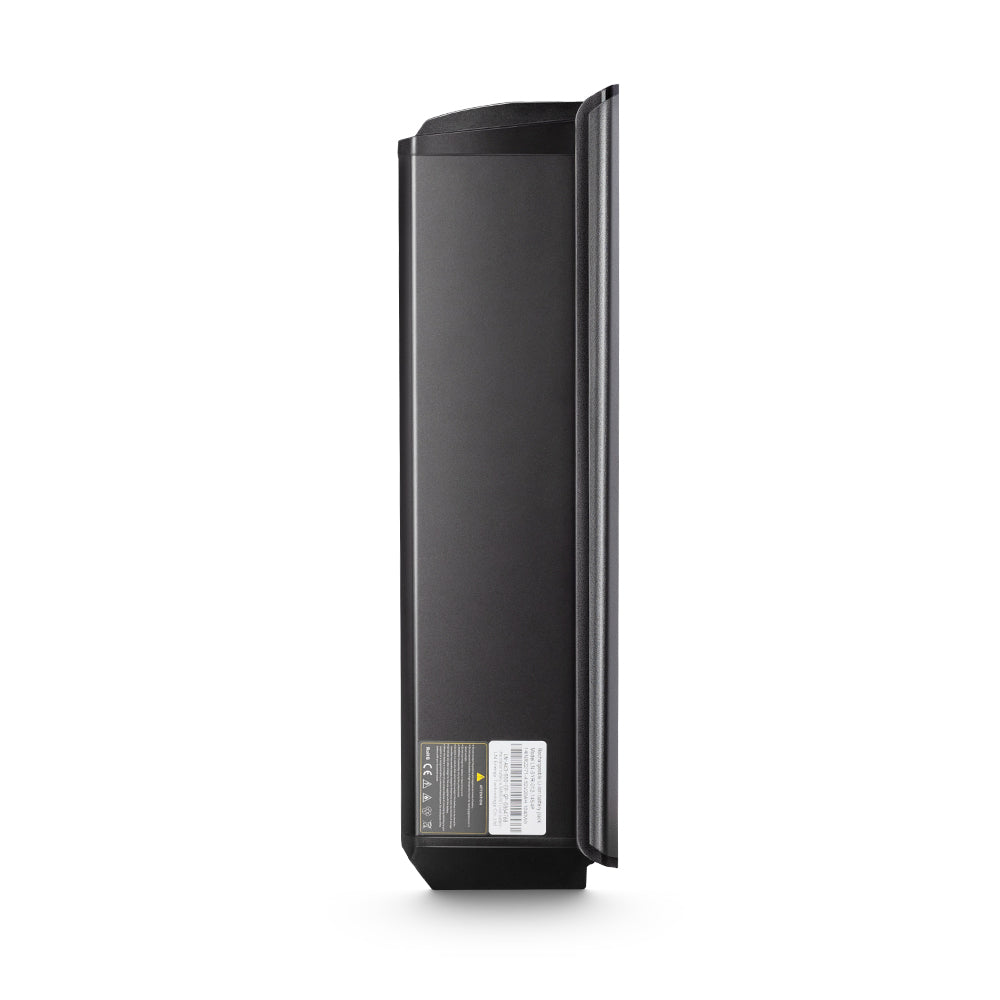
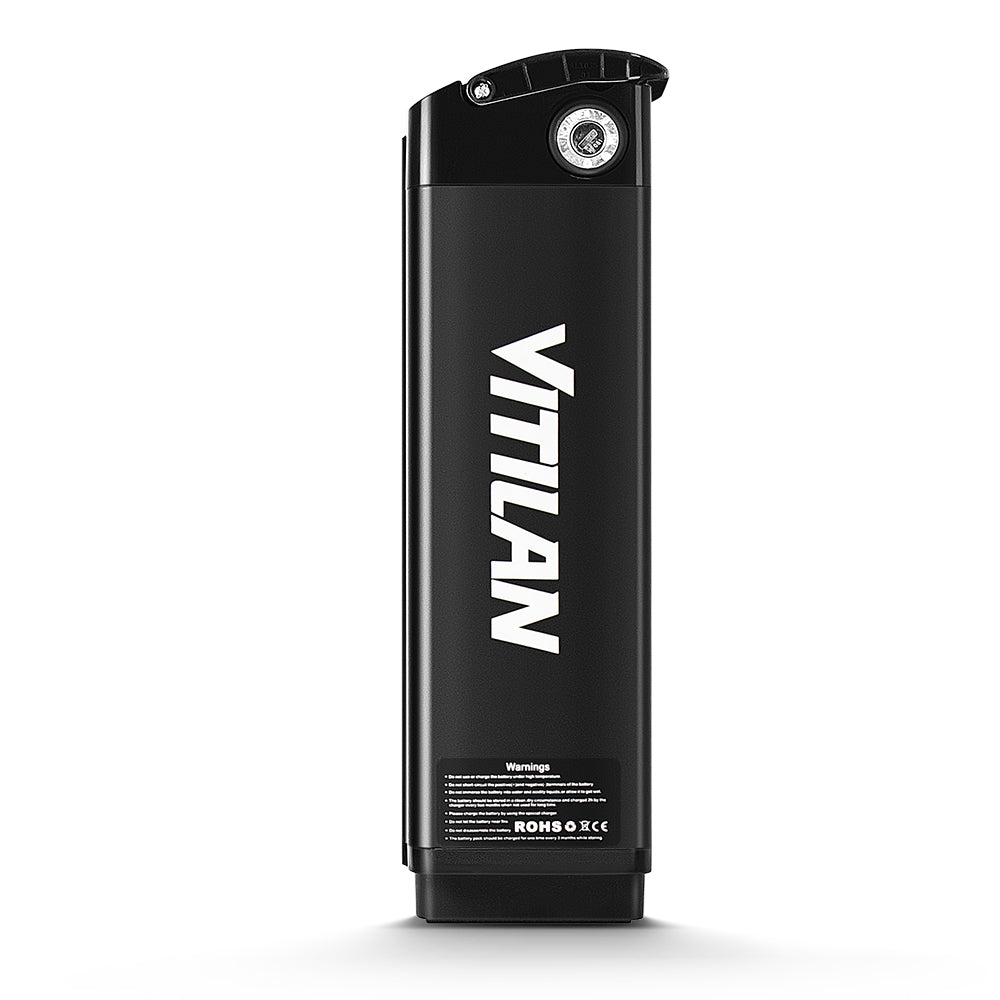
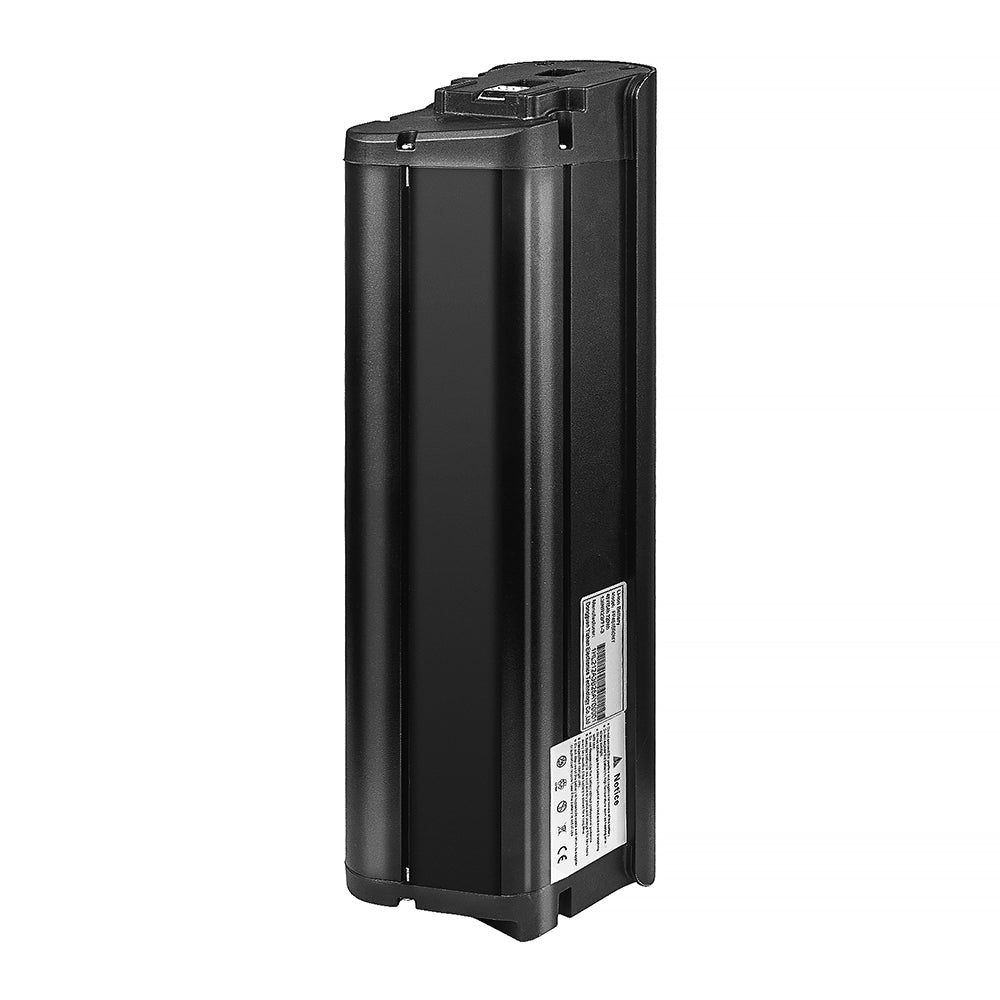
For example, Vitilan offers an L5 battery designed for the L5 series, currently listed as a 48V 15Ah removable Samsung lithium-ion battery.
For an L5 owner, the useful part is not only the voltage or capacity figure. It also means there is a battery designed specifically for the bike when the original one eventually loses too much usable capacity.
Vitilan also offers replacement batteries for several models, including the T7, I7 Pro, U7, U3, L5 and V3.
From a long-term ownership perspective, that can matter more than simply choosing whichever e-bike has the largest Wh figure.
Check the Warranty and Long-Term Replacement Cost
Battery lifespan and battery warranty are not the same thing.
Before buying, it is worth checking how long the battery is covered, which faults are included, and how normal capacity loss or accidental physical damage is treated.
The battery is also one of the more valuable replacement components on an e-bike. Knowing whether an official replacement is available, and roughly what it may cost, can make long-term ownership expenses easier to understand.
Choose Capacity Around Your Actual Riding
The biggest battery is not necessarily the best choice for every rider.
If most journeys are short urban commutes, paying for extra capacity, weight and cost may not offer much practical benefit. Riders who regularly cover longer distances, climb hills or carry cargo may value the extra energy much more.
Before buying, consider:
- How much range do you actually need each day?
- Can the battery be removed for charging?
- Is it easy to store at home?
- Is a compatible replacement battery available?
- How long is the battery warranty?
- What might replacement cost later?
- If capacity falls after several years, will the remaining range still be enough for your usual journeys?
An e-bike battery is not only about how far the bike can travel when it is new.
How easy the battery is to maintain, diagnose and replace several years later can have just as much influence on whether the bike is practical to own long term.
Three to five years or several hundred charge cycles can be useful reference points, but they should not be treated as a fixed countdown. Looking at battery quality, replacement availability and long-term ownership cost gives a much clearer picture than simply asking, “How many years will this battery last?”
FAQ
How Many Years Does an E-Bike Battery Usually Last?
Many lithium-ion e-bike batteries can remain usable for several years. Around 3–5 years is a common reference range, but actual lifespan depends on factors such as cell quality, charge cycles, temperature, storage conditions and riding habits.
Does 500 Charges Mean Plugging the Charger In 500 Times?
No. A full charge cycle usually means using the equivalent of 100% of the battery's total capacity. Several partial discharges and recharges can add up to one complete cycle.
Does an E-Bike Battery Need Replacing Below 80% Capacity?
Not necessarily. There is no universal 80% replacement rule for every e-bike battery. If the battery remains reliable and still provides enough range for your needs, it may continue to be useful.
Does a Larger E-Bike Battery Last Longer?
Not automatically. A higher Wh rating mainly means the battery can store more energy. Long-term lifespan still depends on cell quality, the BMS, temperature, charge cycles and how the battery is used.
When Should I Consider Replacing an E-Bike Battery?
If the available range no longer meets your needs, or the battery frequently cuts out or fails to charge normally, it may be worth having it checked. If the battery is swollen, leaking, unusually hot, damaged or producing an unusual smell, stop using it and seek professional assistance.
Why Should I Check Replacement Battery Availability Before Buying an E-Bike?
Lithium-ion batteries gradually lose capacity with use. If a compatible replacement battery is readily available, it is much easier to keep using the same e-bike when the original battery eventually no longer provides enough range.


