










How to Prevent E-Bike Theft: Locks, Battery and Parking Security Guide
by wangziru on Oct 30, 2026

Buying an electric bike is a considerable investment, so protecting it should be part of everyday ownership. Unlike a standard bicycle, an e-bike has several valuable components that can attract thieves, including its battery, display and removable accessories. Whether you leave your bike outside a railway station, lock it up while shopping or store it in a shared apartment garage, each situation comes with different security considerations. A good lock is important, but it is only one part of the picture. Knowing how to secure the frame, when to remove the battery and how to keep a record of your bike can all help reduce the risk of theft. This guide covers practical ways to protect an e-bike at home and in public, with real police-reported theft cases showing why certain security measures are worth considering.
Why Does an E-Bike Need More Than a Standard Bike Lock?
An electric bike has several characteristics that make its security requirements different from those of a conventional bicycle.
First, there is the value of the bike itself. An e-bike often represents a significant financial investment. Leaving it unattended in a public place for several hours, particularly in an isolated location, makes reliable security measures even more important.
Second, there are the removable components. Depending on the model, the battery, display, lights and other accessories may be removed separately. Securing the frame does not necessarily protect these parts.
Weight is another consideration. Many electric bikes are heavier than conventional bicycles, making it less convenient to carry them upstairs or store them indoors every day. As a result, owners often rely on communal cycle rooms, underground parking areas or outdoor cycle stands.
These situations mean that simply locking one wheel is not enough to protect the entire bike.
A practical e-bike security setup should cover three areas:
- Frame and wheels: Prevent the entire bike from being easily taken away.
- Battery and removable components: Reduce the risk of valuable parts being stolen separately.
-
Parking location: Choose a well-lit location with secure parking facilities and fewer opportunities for theft.
The aim is not to make theft completely impossible. It is to make your bike a more difficult target, protect easily removable components and reduce the likelihood of losing your investment.
How to Choose the Right Lock for an Electric Bike
Not all bicycle locks offer the same level of protection. Some are mainly designed to deter opportunistic theft, while others have undergone independent security testing against more determined attacks.
For a relatively expensive e-bike, choosing a lock based on its independent security rating is generally more useful than judging it by appearance, price or chain thickness alone.
Comparing Different Types of Bike Locks
|
Lock type |
Main characteristics |
Best suited to |
|
D-lock (U-lock) |
Rigid construction with limited space for tools when correctly fitted |
Everyday commuting and public parking |
|
Heavy-duty chain lock |
Flexible enough to secure different frame shapes and fixed objects |
Longer parking periods and larger frames |
|
Folding lock |
Compact design that is convenient to carry |
Daily commuting and shorter stops |
|
Cable lock |
Lightweight and flexible, but generally offers less resistance to cutting |
Secondary protection for accessories |
Cable locks are convenient, but they should not be used as the only security measure for a valuable electric bike. They are better suited to securing a helmet or other accessories as an additional precaution.
A D-lock is a practical starting point for most commuters. However, the quality of its locking mechanism, hardened materials, resistance to cutting and independent security rating matter more than the shape of the lock itself.
What Do Sold Secure and ART Ratings Mean?
When comparing bicycle locks in Europe, two independent security certification schemes are worth knowing.
Sold Secure is an independent security testing organisation. Its Powered Cycle category covers locks intended for e-bikes and other powered two-wheelers.
Two ratings worth looking for are:
- Powered Cycle Diamond: The highest rating in this category, designed for locks tested against more demanding attack methods.
-
Powered Cycle Gold: A strong security rating for locks tested against a range of more determined attacks.
Testing considers resistance to methods such as cutting, picking and attacks using heavy-duty tools.
You can check the Sold Secure Powered Cycle ratings to find out more about approved locks.
In the Netherlands, you may also encounter ART certification. This system uses star ratings to indicate the level of security testing a lock has passed. ART-2 is commonly used for bicycle locks, while higher categories apply to other vehicle types. However, the exact rating required depends on the insurer and the policy conditions.
You can find more information about ART-certified locks.
One important point: a lock with a high security rating is not automatically accepted by every insurance provider. If you have e-bike theft insurance, check the required lock certification before making a purchase.
Is One Lock Enough?
If you own a relatively expensive e-bike and regularly leave it in public places, using two different types of locks is worth considering.
For example:
- Use a high-security D-lock to secure the frame and one wheel to a sturdy cycle stand.
- Use a second lock to secure the other wheel or another accessible part of the frame.
Using two different lock types can also mean that a thief needs different tools to attack each one.
However, carrying two low-quality locks does not necessarily offer better protection than using one properly rated lock. Start with a strong primary lock before considering an additional one.
How to Lock an E-Bike Properly
Buying a good lock is only half the job. How you use it matters just as much.
A common mistake is securing only the front wheel. The wheel may remain attached to the parking stand while the rest of the bike is removed. For a relatively expensive e-bike, this is an avoidable security risk.
Secure the Frame to an Immovable Object
The main lock should pass through a structural part of the frame and around a sturdy cycle stand or another suitable fixed object.
When locking your bike, keep the following points in mind:
- Secure the frame rather than relying on the wheel alone.
- Attach the bike to an object that cannot easily be lifted or dismantled.
- Leave as little free space inside the lock as practical.
- Avoid placing the lock directly on the ground.
- Make sure the lock does not press against brake discs, cables or other vulnerable components.
If your bike has quick-release wheels, consider how to protect both wheels. A second lock or suitable security fasteners can help protect the front wheel.
Keep the Lock Close to the Frame and Parking Stand
A loose locking arrangement can leave unnecessary space around the lock, making it easier to position tools.
Keep the bike close to the parking stand and minimise the space inside the lock. Also avoid resting the lock on the ground, as this can make certain attack methods easier.
A Practical Double-Locking Setup for Commuters
For a typical commuter e-bike, the following arrangement is a useful starting point:
- Position the bike next to a sturdy cycle stand.
- Use the main D-lock to secure the frame and rear wheel to the stand, where the bike's geometry allows.
- Use a second lock to secure the front wheel and frame to the stand.
- Remove the battery and easily detachable accessories if the bike will be left unattended for an extended period.
- Check that the parking stand itself is secure and cannot simply be lifted or removed.
The exact arrangement depends on the frame design and wheel configuration. The most important thing is to secure the frame rather than just one wheel.
The police guide to preventing bicycle theft also recommends double-locking, securing both wheels and attaching the bike to a suitable fixed parking stand.
How to Protect the Battery, Display and Other Removable Parts
This is where e-bike security differs most clearly from conventional bicycle security.
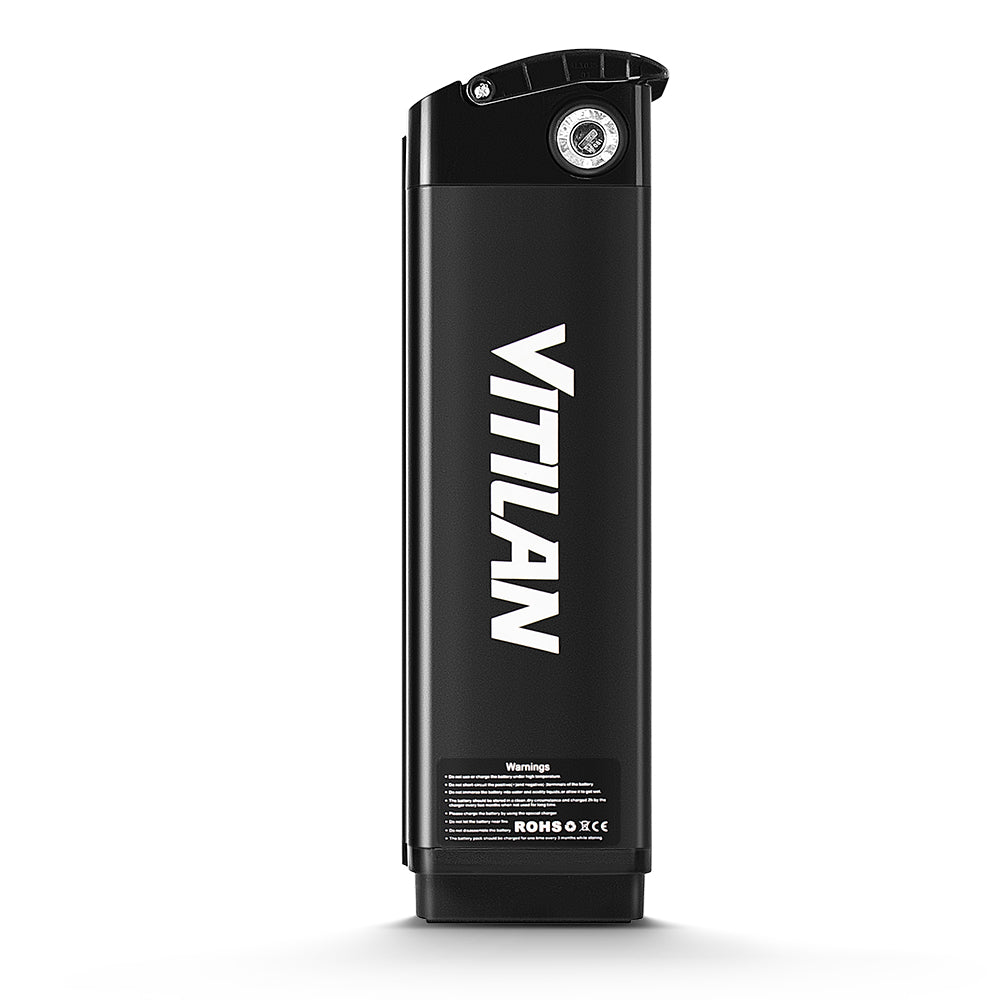
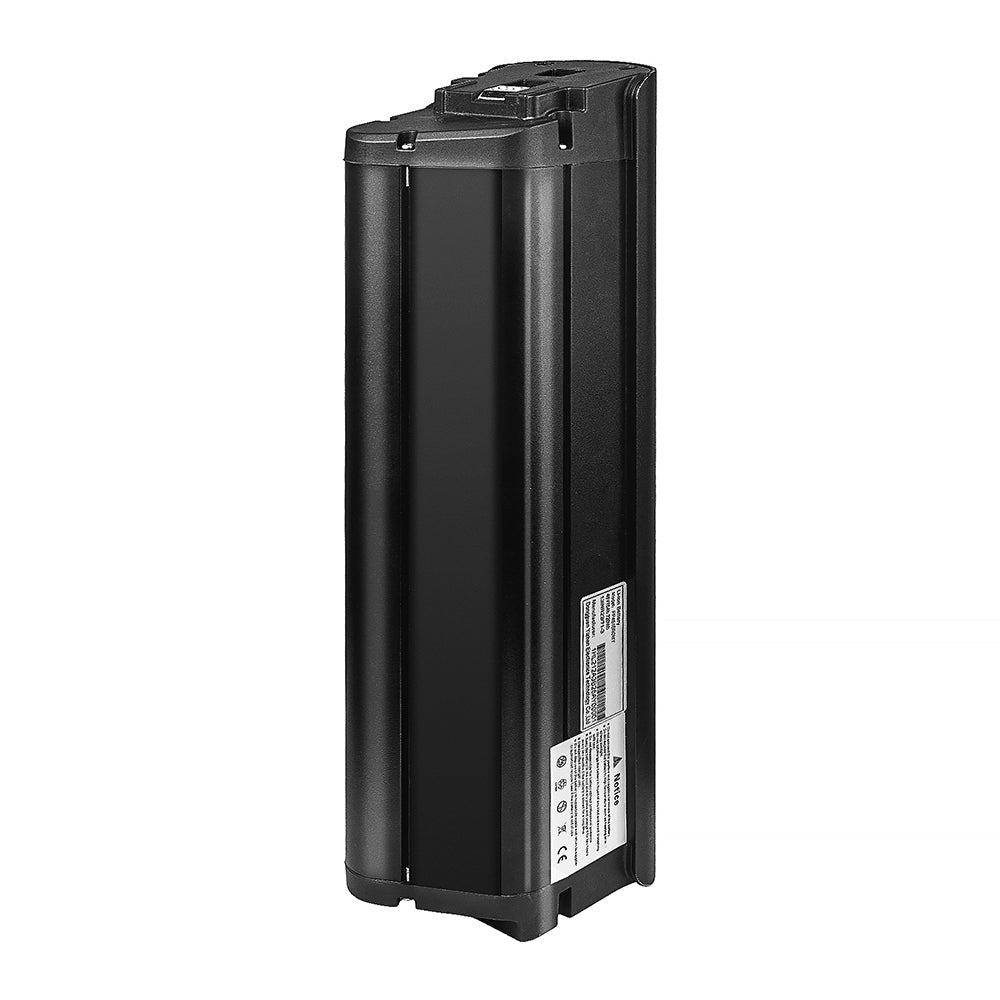
A removable battery is convenient for charging, but it can also become a separate target for theft.
Should You Remove the Battery When Parking?
If your e-bike has a removable battery, taking it with you is a sensible precaution when leaving the bike unattended in a public place for an extended period.
Even if the battery has a built-in locking mechanism, treat it as an additional layer of protection rather than a guarantee that the battery cannot be stolen.
Avon and Somerset Police also recommend removing detachable batteries when parking an e-bike in public and keeping a record of the battery serial number where available.
If your bike has an integrated battery that is not designed for routine removal, follow the manufacturer's instructions and make sure the battery locking mechanism is working properly.
Do Not Overlook the Display and Other Accessories
Depending on the model, the display may be detachable. Some lights, saddle accessories and other components can also be removed without specialist tools.
Before leaving your bike:
- Remove a detachable display if the manufacturer allows it.
- Take removable lights and valuable accessories with you.
- Check that the battery is properly locked if it cannot be removed.
- Consider security fasteners for components that are regularly left on the bike.
- Keep a record of battery and other valuable component serial numbers where available.
These small habits can prevent unnecessary losses. For example, if you stop at a café during your commute and leave your bike outside for an hour, taking a detachable battery and display inside is often easier than dealing with stolen components later.
A Real Example: Why Battery and Component Security Matter
Police investigations in Europe also show why identifying and protecting individual components is important.
In May 2025, Essen Police reported recovering 37 bicycles from two basement storage areas during an investigation. Six were identified as stolen, including a pedelec located using its built-in GPS tracker.
The police also highlighted the importance of recording frame numbers and other identifying details.
This case shows why keeping a record of your bike's identifying information can make a difference if it is stolen and later recovered.

Where Should You Park an E-Bike During Your Daily Commute?
Parking location is often overlooked. A good lock is important, but leaving a valuable electric bike in an isolated location for several hours is not ideal.
The best parking option depends on how long the bike will be unattended and what facilities are available.
Railway Stations and Public Transport Hubs
Railway stations are common places for commuters to leave their bikes throughout the working day. Some riders may leave their e-bikes there for eight hours or longer.
If you regularly park at a station:
- Use designated cycle parking rather than an isolated railing.
- Look for secure facilities with controlled access.
- Choose a well-lit location with visible CCTV coverage where available.
- Secure the frame and wheels rather than relying on a built-in wheel lock.
- Remove the battery and detachable display if practical.
If your station has secure indoor cycle parking, it is generally preferable to leaving an e-bike outside all day.
Shops, Supermarkets and Cafés
Short stops are where people often become careless.
For example, a rider might lock their bike for a few minutes while buying groceries or collecting a takeaway order, assuming that such a short absence does not require much attention.
However, even when you expect to be away briefly, the frame should still be secured to a reliable parking facility.
For particularly valuable e-bikes, avoid locations where the parking stand is poorly secured or where the bike can easily be moved out of sight.
Office and Commercial Parking
If you commute to work regularly, ask whether your workplace has a dedicated cycle room or secure storage facility.
A sheltered parking space is useful, but a locked building alone does not guarantee that your bike is safe. Where possible, secure the frame to a fixed anchor inside the storage area.
Another practical point is consistency. If you leave your bike in the same exposed street location for eight or nine hours every day, its parking routine becomes predictable.
Where possible, use secure parking facilities rather than relying on the same open street stand every day.
How to Keep an E-Bike Secure at Home or in an Apartment
Many owners assume that theft is mainly a street-parking problem. In reality, garages, shared cycle rooms, communal hallways and residential storage areas also need attention.
A locked building does not automatically mean that every bicycle inside is secure.
Shared Apartment Cycle Rooms
Communal cycle rooms are convenient, especially for heavier e-bikes that are difficult to carry upstairs.
However, several residents may have access to the same room. Visitors, contractors or other people may also be able to enter, depending on the building's access arrangements.
Consider the following:
- Secure the e-bike to a fixed anchor if one is available.
- Avoid leaving the battery or display attached unnecessarily.
- Do not leave the key in the battery lock.
- Keep a record of the frame and battery serial numbers.
- Check whether the room has controlled access and whether the entrance closes properly.
Private Garages and Garden Sheds
A private garage or shed can reduce access by outsiders, but the building itself needs to be secure.
A useful setup includes a solid door lock, reliable security fittings and, where practical, a floor or wall anchor.
Even when the bike is stored indoors, lock it to the anchor rather than relying entirely on the garage door.
If the bike is visible from the street through a window or open garage door, avoid unnecessarily exposing it to public view.
Be Careful with Location-Sharing Apps
This is a detail that many riders overlook.
Some cycling apps record routes, starting points and destinations. If these details are publicly shared, they can reveal where you live, where you work and when you regularly leave home.
Avon and Somerset Police recommend setting privacy zones around home and work locations and avoiding publicly sharing ride details that reveal where valuable bicycles are kept.
If you use a cycling app, check its privacy settings and limit the visibility of your regular routes.
Are GPS Trackers, Bike Registration and Insurance Worth Having?
Locks help reduce the risk of theft. GPS trackers and registration help identify and locate a bike, while insurance can reduce the financial impact if the bike is not recovered.
These measures serve different purposes, so they work best together.
GPS Trackers: Useful, but Not a Replacement for a Lock
A GPS tracker can provide location information after a bike has been moved. Depending on the device, it may also send movement alerts.
However, tracking devices do not all work in the same way. Some use GPS and mobile networks, while smaller Bluetooth-based trackers rely on nearby compatible devices to update their location.
When choosing a tracker, consider:
- Battery life and charging requirements.
- Whether a subscription or mobile data plan is needed.
- Whether the tracker provides movement alerts.
- Whether it works with your smartphone.
- Whether location updates are reliable in the areas where you ride.
A tracker is a backup security measure. It should never replace a proper lock.
Real Case: A GPS Tracker Helped Frankfurt Police Recover a Stolen E-Bike
A case reported by Frankfurt Police in March 2022 shows how useful a tracker can be.
A woman parked her e-bike, valued at approximately €1,400, at a public cycle stand in Frankfurt-Westend at around 8:30 am. She secured it with a combination lock.
When she returned at around 4 pm, the bike was gone. The lock had been left open but showed no obvious signs of damage.
Fortunately, the e-bike had a built-in GPS tracker. The owner used the location information to identify a residential address where the bike was located. Police then used an audible signal to identify the apartment containing the bike. Officers recovered the e-bike and arrested a suspect.
The case highlights two important points: a basic locking arrangement may not be enough for a valuable e-bike, and a tracker can provide useful information during a police investigation.
Another Real Case: Trackers Helped Merseyside Police Locate Stolen E-Bikes
In March 2025, Merseyside Police reported that two teenagers had their electric bikes forcibly taken in Everton.
The boys returned home and their parents contacted the police. Officers used trackers fitted to the bikes to locate them at a property in the area.
A 22-year-old man was arrested on suspicion of robbery, and the two e-bikes were seized for return to their owners.
This was not a case of someone simply cutting through a lock. It shows that e-bike security also needs to consider theft away from a parking stand.
A tracker cannot prevent a robbery, but it can provide useful information to the police afterwards. Owners should never attempt to confront suspected thieves themselves.
Register Your Frame Number and Keep Proof of Ownership
Every e-bike owner should keep a record of the bike's identifying details.
The frame number is particularly important. It is commonly stamped underneath the bottom bracket area, between the pedals, although its exact location varies by manufacturer and model.
Keep the following information:
- Frame number and battery serial number.
- Manufacturer, model and colour.
- Purchase invoice and proof of ownership.
- Clear photographs of the complete bike.
- Photographs of distinctive marks, accessories or modifications.
Registering your bike with a recognised bicycle database can also help establish ownership if it is recovered.
Registration services differ between European countries, so choose a recognised scheme available in your location rather than assuming one database covers every European market.
What Should You Check Before Buying Insurance?
A common mistake is assuming that household contents insurance automatically covers an electric bike wherever it is parked.
In reality, policies vary considerably. Some may cover theft from a home or garage but have additional conditions for theft in public places.
Before buying insurance, check:
- Whether the policy covers the full value of your e-bike.
- Whether theft outside the home is included.
- Whether a specific lock certification is required.
- Whether the bike must be secured to an immovable object.
- Whether the battery and accessories are covered.
- Whether there are restrictions on how long the bike can be left unattended.
Kee your lock purchase receipt and any keys or documents required by the insurer. If you need to make a claim, being able to show that you followed the policy conditions can make the process easier.
What Should You Do If Your E-Bike Is Stolen?
Finding an empty parking space where your e-bike should be is frustrating, particularly if you rely on it for commuting.
The first few actions matter. Rather than immediately searching for the bike yourself, gather the information needed by the police and your insurer.
Step 1: Confirm the theft and record the circumstances.
Check the immediate area in case the bike has been moved by building management or parking staff. Record where it was parked and when you last saw it.
Step 2: Report the theft to the police.
Provide the frame number, model, colour, photographs and proof of ownership. Include the location and approximate time of the theft.
Step 3: Check your tracking device.
If your bike has GPS tracking, save the latest location and any movement history. Pass this information to the police.
Do not enter private property or approach a suspected thief yourself.
Step 4: Contact your insurance provider.
Notify the insurer promptly and provide the police report reference, purchase invoice, lock details and any other documents requested under your policy.
Step 5: Update your bicycle registration.
If your bike is registered with a bicycle database, change its status to stolen. This can help identify it if it is later recovered or offered for resale.
Step 6: Watch for suspicious resale listings.
Keep an eye on local second-hand marketplaces for bikes matching yours. Compare identifying features rather than relying only on the model name or colour.
If you find a possible match, save the listing details and provide them to the police. Do not arrange a private confrontation with the seller.
If you're also considering buying an electric bike, security is worth thinking about before making a decision. Alongside battery capacity, range and frame design, consider how the bike will be stored and secured during everyday use. Explore the VITILAN electric bike collection to discover different models and configurations, and consider which features best suit your riding and parking habits.
Frequently Asked Questions
What Is the Best Lock for an Electric Bike?
A high-security D-lock or heavy-duty chain lock is a good starting point. For a valuable e-bike, look for an independently tested security rating, such as Sold Secure Powered Cycle Gold or Diamond. In the Netherlands, check whether your insurer requires an ART-certified lock. The right choice depends on the bike's value, where you park and your insurance conditions.
Should I Remove My E-Bike Battery When Parking?
If your e-bike has a removable battery, taking it with you when leaving the bike unattended in a public place is a sensible precaution. The battery locking mechanism provides additional protection, but it should not be treated as completely theft-proof. Always follow the manufacturer's instructions when removing or refitting the battery.
Is One Lock Enough to Secure an Electric Bike?
One properly rated lock is better than several low-quality alternatives. However, for regular public parking, using two different high-quality locks can provide an additional obstacle by securing the frame and both wheels. The most important point is that the main lock must secure the frame to an immovable object.
Can a Stolen Electric Bike Be Tracked?
Yes, if it has a suitable active tracking device installed. Some trackers provide GPS location updates, while others use nearby compatible devices to help locate the bike. Tracking can assist police investigations and improve the chances of recovery, but it cannot guarantee that a stolen bike will be found.
Does E-Bike Insurance Cover Theft?
Some insurance policies cover e-bike theft, but coverage depends on the insurer and the policy conditions. You may need an approved lock, proof that the bike was secured to a fixed object and evidence of ownership. Always check the exclusions and security requirements before purchasing a policy.


