










How to Read E-Bike Specifications: A Guide to Key Numbers and Technical Terms
by wangziru on Oct 21, 2026

When you open an electric bike product page, you may come across a series of numbers and abbreviations, such as 52V, 20Ah, 1040Wh, 8-speed and 26 × 4.0-inch tyres. Each describes a different aspect of the bike, from its battery and gearing to its tyres and other components. Without understanding what these figures mean, it is easy to confuse battery capacity with riding range, mistake gear numbers for pedal-assist levels or judge an entire bike by a single specification.
You do not need an engineering background to understand an e-bike specification sheet. Knowing what each figure represents and how to interpret it makes comparing different models much easier. You can also explore the official VITILAN website to see how these specifications appear on actual bikes. This guide explains the key terms used for motors, batteries, pedal assistance, tyres, suspension and braking systems.
E-Bike Specifications at a Glance
|
Specification |
What It Means |
What to Look For |
|
W (watts) |
Power |
Rated continuous power versus peak power |
|
Nm (newton metres) |
Torque |
Rotational force |
|
V (volts) |
Voltage |
An electrical specification of the battery |
|
Ah (amp-hours) |
Charge capacity |
Does not indicate total battery energy on its own |
|
Wh (watt-hours) |
Energy |
Useful for comparing nominal battery energy |
|
PAS |
Pedal Assist System |
Levels and settings of electric assistance |
|
Cadence sensor |
Pedalling rotation sensor |
Detects pedalling or crank rotation |
|
Torque sensor |
Pedalling force sensor |
Measures force applied to the pedals |
|
7-speed / 8-speed |
Number of gear speeds |
Not the same as pedal-assist levels |
|
26 × 4.0 inches |
Nominal tyre size |
Nominal size and width |
|
Suspension travel |
Suspension movement |
Usually measured in millimetres |
|
180mm disc brake |
Brake disc specification |
Usually refers to disc diameter |
|
Payload |
Maximum load |
Check the manufacturer's definition |
|
IP rating |
Protection against dust and water |
Does not automatically mean submersion is safe |
Motor Specifications: W, Nm and Drive Types
W: Rated Continuous Power vs Peak Power
W stands for watts, the unit used to measure power. E-bike specifications commonly list two types of motor power:
- Rated continuous power: The rated mechanical power a motor can deliver continuously under specified conditions.
- Peak power: A higher power output that may be available for a limited time under particular conditions.
For example, one bike might be listed with 250W rated power, while another advertises 500W peak power. These figures are not directly comparable because they describe different measurements.
For the European market, a conventional EPAC pedelec generally needs a maximum continuous rated motor power of no more than 250W, alongside the applicable requirements for pedal assistance and motor cut-off. The power figure alone is not enough to establish whether a complete bike meets all requirements for road use.
Nm: What Does Torque Mean?
Nm stands for newton metres, the unit used to measure torque, or rotational force.
Power and torque are related, but they are not interchangeable. Torque describes rotational force, while power describes the rate at which work is done. Motor speed also plays a role in the relationship between them.
When comparing torque figures, check whether manufacturers use the same definitions and testing methods. Torque can help explain one aspect of a drive system, but it cannot independently establish a bike's climbing ability, acceleration or riding comfort.
Hub Motors, Mid-Drive Motors and Dual-Motor Systems
Motor terminology usually describes the motor's position or the number of motors fitted:
- Hub motor: Installed in the front or rear wheel hub to drive the wheel directly.
- Mid-drive motor: Installed near the centre of the frame, usually around the crank area, and drives the bike through the drivetrain.
-
Single motor / dual motor: Describes whether the bike has one motor or two.
These designs differ in how power is transferred, how weight is distributed and how the drivetrain is configured. Motor position and motor count should not be treated as substitutes for specific power or torque figures.
Battery Specifications: V, Ah, Wh and Charging
V: Battery Voltage
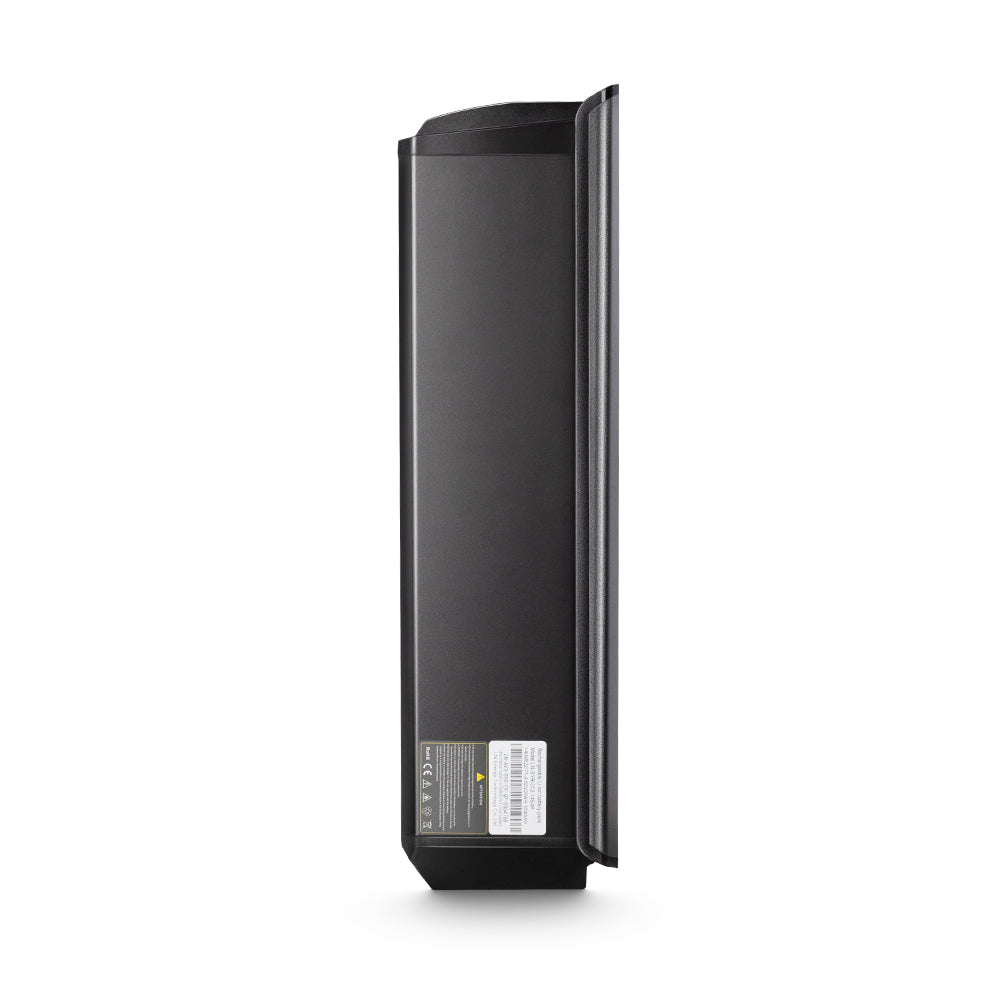
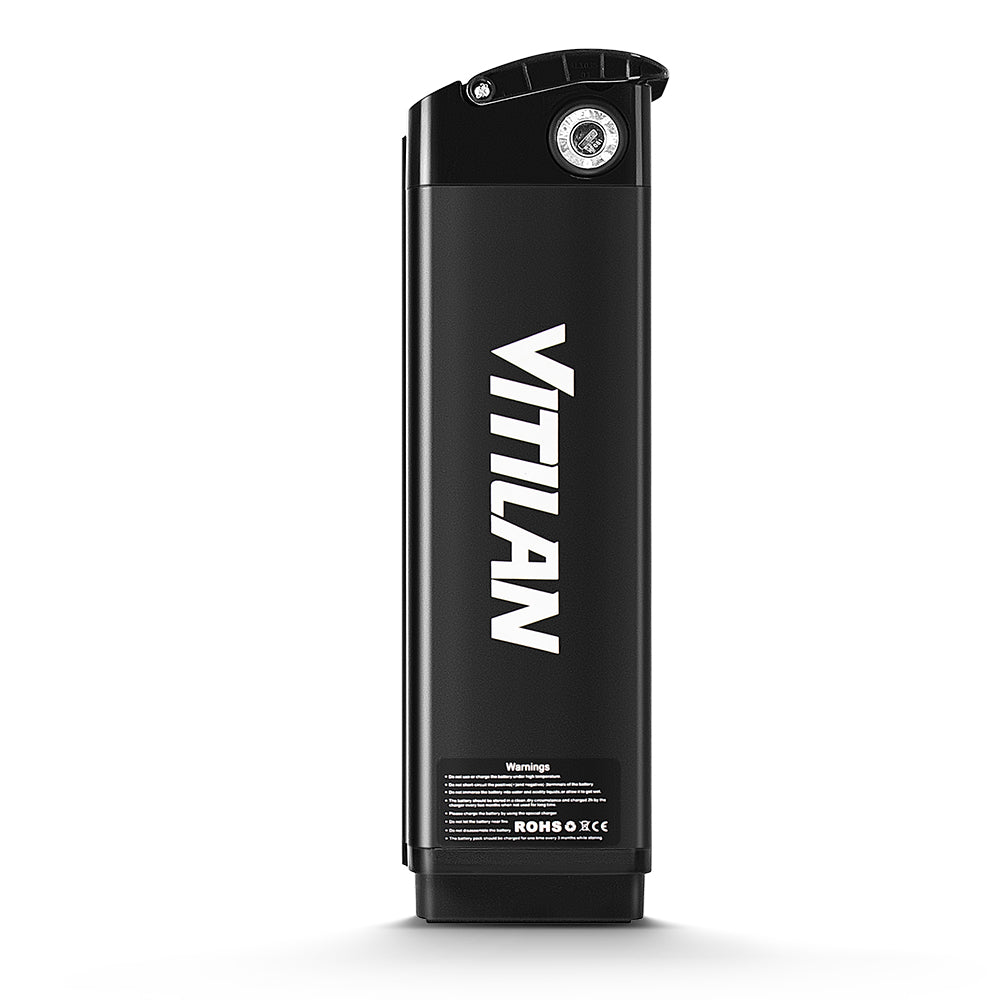
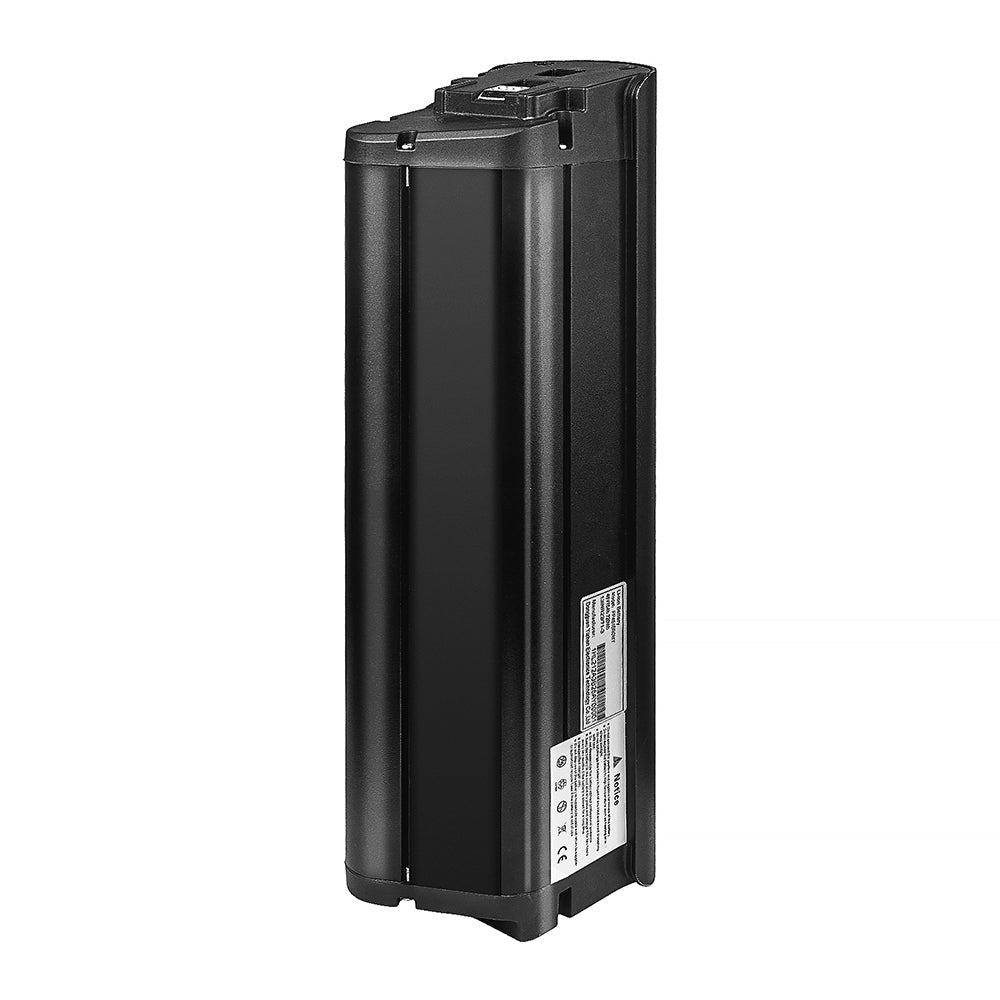
V stands for volts and measures voltage. For example, 52V refers to a battery's nominal voltage rating.
Voltage is an important part of a battery's electrical specification, but it does not tell you how much energy the battery stores on its own. When comparing bikes, consider voltage alongside battery capacity and the specifications of the wider electrical system.
Ah vs Wh: What's the Difference?
Ah stands for amp-hours and describes a battery's charge capacity. Wh stands for watt-hours and describes energy. The two units are not interchangeable.
If the nominal voltage and amp-hour rating are known, nominal battery energy can be estimated using this formula:
[\text{Wh}=\text{V}\times\text{Ah}]
|
Battery Specification |
Calculation |
Nominal Energy |
|
36V, 15Ah |
36 × 15 |
540Wh |
|
48V, 15Ah |
48 × 15 |
720Wh |
|
52V, 20Ah |
52 × 20 |
1040Wh |
This shows why batteries with the same Ah rating can store different amounts of energy. Wh is generally more useful when comparing the nominal energy of batteries with different voltages.
However, battery energy cannot be converted directly into a guaranteed riding range. Actual range also depends on assistance settings, gradients, temperature, rider weight and the energy the bike uses while riding.
Charger Voltage, Current and Charging Time
Charger specifications usually include output voltage (V) and output current (A). A charger rated at 3.0A, for example, has a nominal output current of 3.0 amps. This does not mean the current remains constant throughout the entire charging process.
Actual charging time depends on factors such as the battery's remaining charge, changes in charging current, temperature and the battery management system. Always check charger compatibility with the battery and follow the manufacturer's instructions.
BMS and Charge Cycles
A BMS (Battery Management System) monitors and manages battery operating parameters and provides protective and control functions according to its design.
A charge cycle generally refers to accumulated charging and discharging equivalent to one full cycle. It does not necessarily mean the battery must be charged from 0% to 100% every time.
If the manufacturer does not publish a battery's cycle life, do not assume how many cycles or years it will last.

Pedal Assistance, Sensors and Gears
PAS: Pedal-Assist Levels
PAS stands for Pedal Assist System. It uses pedalling-related signals and the system's control settings to provide electric assistance.
A specification such as PAS 1–5 generally indicates five assistance levels. The precise behaviour of each level depends on the bike's control system and should be checked against the owner's manual.
Pedal-assist levels and mechanical gears are two separate systems.
|
Feature |
PAS Levels |
Mechanical Gears |
|
What it controls |
Electric assistance settings |
Gear ratio |
|
Common notation |
Level 1–5 |
7-speed, 8-speed |
|
Main purpose |
Adjusts electric assistance |
Adjusts pedalling cadence and gearing |
Cadence Sensors vs Torque Sensors
A cadence sensor primarily detects crank or pedalling rotation. A torque sensor measures the force applied to the pedals and sends this information to the assistance control system.
The two sensors measure different things. The riding experience also depends on the control algorithm, assistance settings and how the wider system works together. The sensor type alone does not prove that a bike will feel more powerful, smoother or more efficient.
If the product specifications do not identify the sensor type, do not infer it from the model's positioning or other components.
7-Speed and 8-Speed: Understanding Gear Counts
Seven-speed and eight-speed refer to the number of speeds available through the mechanical gearing system.
The number of gears does not tell you everything about how the drivetrain performs. Gear range, derailleur design and the specific transmission components also matter.
If a specification lists a Shimano brand, a particular shifter model and an eight-speed system, these details identify different things: the component brand, the specific part and the number of available speeds.
Tyre, Suspension and Brake Specifications
26 × 4.0 Inches: Understanding Tyre Sizes
A tyre marking such as 26 × 4.0 inches generally indicates a nominal wheel-size category and nominal tyre width. It does not give the actual diameter and width of the rim.
Before buying a replacement tyre or inner tube, check the markings on the existing tyre, the rim specification and the manufacturer's compatibility guidance. Tyre size alone does not determine grip or rolling resistance; tread design, pressure, materials and road conditions also affect performance.
Hardtail, Full Suspension and Suspension Travel
- Hardtail: Usually refers to a bike with front suspension but no rear suspension.
- Full suspension: Refers to a bike with both front and rear suspension.
-
Suspension travel: The distance the suspension can move, usually measured in millimetres (mm).
For example, 105mm of fork travel describes the front fork's travel specification. It does not mean the rear shock has the same amount of travel.
Travel figures alone do not determine suspension performance. Spring or air-pressure settings, damping, frame design and riding conditions all influence how the system behaves.
Hydraulic Disc Brakes, Mechanical Disc Brakes and Disc Size
Hydraulic disc brakes use a hydraulic system to transfer braking force, while mechanical disc brakes generally use a cable.
If a specification lists 180mm disc brakes, the figure usually refers to the diameter of the brake disc, not the stopping distance.
When comparing brakes, identify the brake type, disc size and specific component model separately. These details help explain the braking setup, but they cannot establish a bike's actual stopping distance on their own.
E-bikes can differ considerably in their tyre, suspension and braking setups. Explore the VITILAN electric bike range to learn more about the designs and configurations available across different models.
Weight, Payload, Frame Size and Protection Ratings
Net Weight, Payload and Maximum Rider Weight
These terms have different meanings:
- Net weight: Usually refers to the bike's own weight, but check whether the manufacturer includes the battery and accessories.
- Payload: The maximum load the bike is designed to carry. The manufacturer's definition determines what is included.
-
Maximum rider weight: The specified weight limit for the rider.
For example, a maximum payload of 150kg does not necessarily mean that the rider alone can weigh 150kg. Luggage and other loads may also count towards the total.
Rack Capacity
Rack capacity refers to the load limit of the rack itself. It is separate from the bike's overall payload rating.
Even if a bike has a relatively high maximum payload, its rack may have a lower individual limit. If you plan to carry luggage or fit a rack, check both specifications.
Rider Height, Frame Size and Folded Dimensions
- Rider height: The height range recommended by the manufacturer.
- Frame size: The dimensions or size category of the frame, which may be specified differently depending on the frame design and manufacturer.
- Folded dimensions: The bike's length, width and height when folded.
A recommended rider-height range is a useful starting point, but it does not replace checking the standover height, saddle-height adjustment and frame geometry.
For a folding e-bike, check the actual folded dimensions rather than assuming it will fit into a particular storage space simply because it folds.
IP Rating: Dust and Water Protection
An IP rating indicates the level of protection an enclosure provides against the ingress of solid objects and water.
In a typical IP code, the first digit relates to protection against solid objects, while the second relates to water ingress. In IPX6, the X means that no solid-object protection rating is specified in that position. The 6 indicates protection against powerful water jets under defined test conditions.
IPX6 does not mean the bike can be submerged in water, nor does it guarantee that every electrical component has the same level of protection. Always follow the manufacturer's guidance on water exposure and cleaning.

Understanding Real E-Bike Specifications: The VITILAN T7 PRO Example
The previous sections explain the terminology commonly found on e-bike specification sheets. The VITILAN T7 PRO provides a practical example of how to read these figures and understand what each specification tells you.
The following example uses selected details listed in the model's product information. Its purpose is to explain the specifications, rather than to treat any individual component as proof of unverified performance claims.
Battery: 52V, 20Ah and 1040Wh
The T7 PRO product information lists a 52V, 20Ah battery with 1040Wh of energy.
Using the formula introduced earlier:
[52\times20=1040\text{Wh}]
The calculation matches the listed 1040Wh figure. This confirms that the nominal voltage, charge capacity and stated energy are mathematically consistent. It does not establish a guaranteed riding range.
Gearing: Shimano 8-Speed
The T7 PRO is listed with a Shimano eight-speed gearing system, along with a Shimano SL-M315 shifter.
These details identify different aspects of the drivetrain: the number of speeds, the component brand and the specific shifter model. Eight-speed refers to mechanical gearing, not eight levels of electric assistance.
Tyres: CST 26 × 4.0 Inches
The T7 PRO specifications list CST 26 × 4.0-inch tyres.
This marking describes the nominal tyre-size category and width. The product information also lists a puncture-resistant construction. This describes a design feature, not a guarantee that the tyres cannot be punctured under any conditions.
Suspension: 105mm Fork Travel and Full-Suspension Design
The T7 PRO specifications list 105mm of front fork travel and a front-and-rear suspension setup.
Full suspension describes the overall layout, while 105mm refers specifically to the front fork. The product information also lists a DNM AO-8RC rear shock, but the front fork's travel figure should not be taken as the rear shock's travel measurement.
Brakes: TEKTRO 180mm Hydraulic Disc Brakes
The T7 PRO product information lists TEKTRO 180mm hydraulic disc brakes.
This specification contains three separate details: TEKTRO is the component brand, 180mm generally refers to the disc diameter, and hydraulic disc brakes identify the braking system type. These details help identify the setup but do not establish the bike's actual stopping distance.
The T7 PRO Specifications at a Glance
|
Specification |
What It Describes |
What You Can Confirm |
|
52V, 20Ah, 1040Wh |
Battery |
The nominal energy calculation is consistent |
|
Shimano 8-speed |
Gearing |
The number of mechanical speeds |
|
CST 26 × 4.0-inch tyres |
Tyres |
Nominal size category and width |
|
105mm fork travel |
Suspension |
Front fork travel |
|
TEKTRO 180mm hydraulic disc brakes |
Braking |
Brand, disc diameter and brake type |
Visit the VITILAN T7 PRO product page to check the full specifications currently listed for this model.
FAQ: Common Questions About E-Bike Specifications
Can rated power and peak power be compared directly?
No. Rated continuous power describes the motor's rated sustained output under specified conditions, while peak power describes a higher output that may be available under particular conditions. Make sure the figures refer to the same type of measurement before comparing them.
Can Wh be converted directly into riding range?
No. Wh indicates nominal battery energy, while actual range also depends on energy consumption, assistance settings, terrain, rider weight and weather conditions.
Does IPX6 mean an e-bike can be submerged in water?
No. IPX6 relates to protection against powerful water jets under defined test conditions. It is not a submersion rating. Follow the manufacturer's instructions for cleaning and water exposure.
What should you do if a specification is missing?
Do not infer the missing figure from the model name, product images or other components. Check the manufacturer's full specifications or owner's manual, or contact the official support team before using the information to compare bikes.
Conclusion: Understand the Numbers Before Comparing E-Bikes
E-bike specifications such as W, Nm, V, Ah, Wh, gear counts, tyre sizes, suspension travel and brake dimensions describe different technical features. Together, they help you understand a bike, but they are not interchangeable.
The VITILAN T7 PRO illustrates how these figures serve different purposes. Its 52V, 20Ah and 1040Wh battery specifications can be checked using a simple calculation, while its eight-speed gearing, 26 × 4.0-inch tyres, 105mm fork travel and 180mm hydraulic disc brakes describe separate parts of the bike's design.
The key to reading an e-bike specification sheet is not to look for the biggest number, but to understand what each figure measures and whether it can be compared directly with another model.


